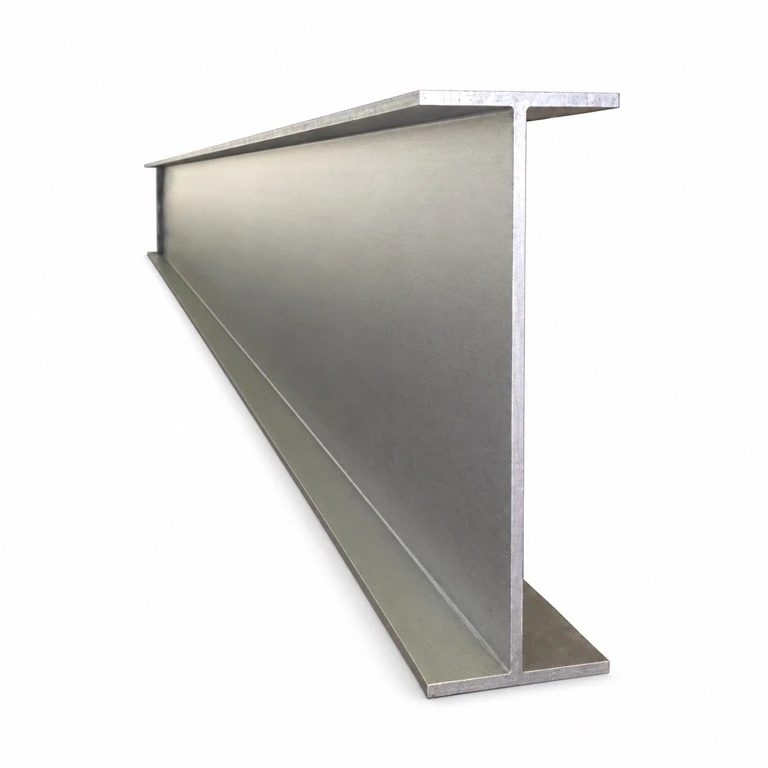
Available forms
All formsMaterial supply from our Baie-D’Urfé facility, with local delivery and long-distance shipping. Custom cutting depends on the material and dimensions. Availability and lead times are confirmed with your quote.
Grades and characteristics
304 / 304L
General-fabrication austenitic stainless steels. 304L has a lower carbon limit to reduce susceptibility to intergranular corrosion after welding; 304 and 304L remain distinct designations.
UsesFood equipment, sheet-metal fabrication, tanks and fabricated parts.
Dual certification must be requested and confirmed on the material certificate.
View available forms316 / 316L
Molybdenum-alloyed austenitic stainless steels for greater corrosion demands than common molybdenum-free grades. 316L has a lower carbon limit, useful for welded fabrication.
UsesProcess equipment, valves and welded assemblies.
The 316/316L label guarantees neither dual certification nor universal seawater resistance.
View available forms303
Chromium-nickel stainless steel with sulfur added to improve machining. It prioritizes production of mechanical parts; this choice must not automatically be treated as 304 for corrosion or welding.
View available forms17-4 PH
Martensitic precipitation-hardening stainless steel, strengthened by thermal aging. It combines mechanical strength and corrosion resistance; the selected treatment controls the strength–toughness balance.
Specify the required condition, such as Condition A, H900 or H1150; they are not interchangeable.
View available forms